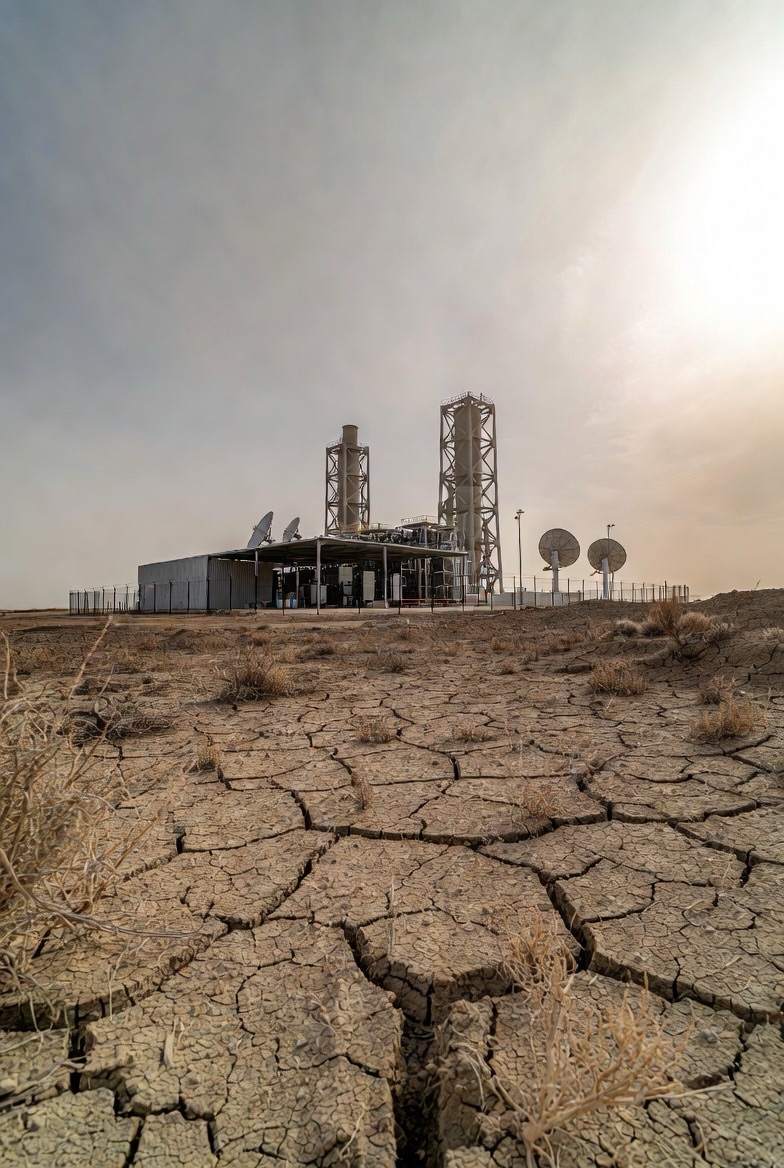
There’s a growing narrative that using AI is environmentally irresponsible because data centres consume water.
Yes, they do.
No, the water does not vanish into a black hole.
And no, the ethical problem is not as simple as “stop using ChatGPT.”
Water used in cooling systems evaporates and re-enters the hydrological cycle. That doesn’t mean there’s zero impact. It means the impact is regional, infrastructural, and political — not mystical.
The outrage isn’t about disappearing water. It’s about where the water is drawn from, who controls it, and what powers the machines using it.
Water Isn’t New. Drought Isn’t New.
Many hyperscale data centres are built in places like Arizona and Texas — regions that were already drought-prone long before AI models entered the picture.
Data centres did not invent water scarcity. They entered markets where water was already stressed, because those markets offered cheap land, favourable regulation, and accessible energy infrastructure.
That distinction matters.
If you build energy-hungry infrastructure in a dry climate, you will create tension. But that tension isn’t proof that AI is uniquely destructive. It’s proof that infrastructure planning and water governance were already fragile.
The Pattern: Bitcoin, Streaming, The Internet, Now AI
This isn’t the first time we’ve had this conversation.
When Bitcoin mining scaled, electricity use became a moral panic. Before that, streaming became global, server farms were blamed for emissions. And let’s not forget that when the internet expanded, the same energy debates surfaced.
The pattern is predictable:
- New technology scales rapidly.
- Infrastructure expands to support it.
- Energy demand increases.
- Environmental alarm follows.
But the core issue hasn’t changed.
If the grid runs on fossil fuels, everything powered by that grid carries environmental cost. AI is not a separate category of harm. It’s another layer on an already fossil-dependent system.
The Real Environmental Impact of AI
Let’s be precise.
AI’s footprint includes:
- Electricity consumption for model training and inference.
- Cooling systems (water or air).
- Hardware manufacturing — GPUs, rare earth metals, embodied carbon.
Training large models requires substantial energy. That’s real. Cooling them requires infrastructure. That’s real too.
But here’s the part that rarely gets discussed:
Major AI providers were already operating enormous cloud systems before generative AI went mainstream.
AI increases load, but it doesn’t create a brand-new industrial category out of thin air.
If you stream video, run cloud backups, trade online, post on social media, or automate your content workflow, you’re already relying on the same backbone.
And if you’re using AI for productivity — whether that’s building affiliate systems (AI Driven Publishing System), leveraging curated tools we recommend, or launching digital products through the Digital Product Shortcut — you’re participating in infrastructure that already exists.
The ethical question is not whether AI consumes energy.
The ethical question is what powers the grid.
Selective Outrage Isn’t Sustainability
If it’s unethical to use AI because it consumes fossil-powered electricity, then consistency demands you apply that standard everywhere.
Is it unethical to:
- Stream Netflix?
- Run air conditioning?
- Scroll Instagram?
- Store photos in the cloud?
- Use automated video tools (10 Best AI Video Generating Platforms)?
- Automate your workflow (How to Automate Your Video Content)?
If the answer is yes, then the conversation is about fossil fuel dependence — not artificial intelligence.
But if the outrage only appears when the technology is new, misunderstood, or culturally threatening, then the concern isn’t environmental. It’s psychological.
AI replacing jobs sparks anxiety. That’s understandable. I’ve already covered 5 Jobs AI Will Never Replace.
I’ve also addressed the fear that AI is making people intellectually weaker (If AI Is Making You Dumber, You’re Using It Wrong).
Environmental framing sometimes becomes a socially acceptable way to express deeper discomfort.
Is It Ethical To Keep Using AI?
That’s the real question.
Yes, AI has environmental impact.
Water use in drought regions deserves scrutiny.
Energy-intensive model training should be measured and optimised.
But abandoning AI doesn’t solve fossil fuel dependency. It simply reduces one category of demand while leaving the upstream energy system unchanged.
The ethical approach is not abstinence. It’s pressure.
- Pressure for renewable-powered data centres.
- Pressure for recycled or non-potable water cooling.
- Pressure for infrastructure to be located in water-abundant regions.
- Pressure for model efficiency improvements.
Technology evolves toward efficiency because efficiency is profitable.
We’ve already seen this in software automation, finance, and content production. AI systems are becoming lighter, more specialised, and more targeted. That trend reduces waste over time.
If you’re using AI to build systems that increase productivity or income — whether through smarter investing (Why the Smartest People Are Letting AI Manage Their Money), structured monetisation (If AI Hasn’t Changed Your Income), AI blogging workflows (How I Use KoalaWriter), or prompt packs like AI Blogging Shortcut, Stock Market Prompt Pack, and Side Hustle Prompt Pack+ — then the conversation shouldn’t be about guilt.
It should be about demanding cleaner infrastructure while leveraging tools that already exist.
Push The Conversation Upstream
Water use is a downstream symptom.
Fossil fuel dependence is upstream.
If sustainability is the standard, then apply it universally.
Reform grids. Incentivise renewables. Build nuclear where appropriate. Improve cooling efficiency. Penalise wasteful design.
But pretending that abstaining from AI will restore ecological balance while continuing to rely on fossil-powered infrastructure everywhere else is incoherent.
AI is not uniquely immoral.
It is an amplifier.
And like every amplifier, its environmental impact depends on what feeds it.
Leave a Reply